Can a Broken Collar Bone in a Baby Cause Nerve Damage Later in Life
Collarbone Fractures
What is a Collarbone?
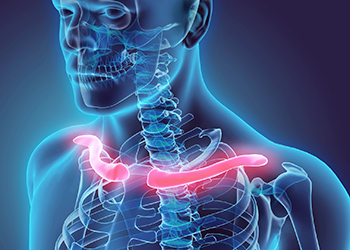
The clavicle, which is normally known every bit the collarbone, is the bone found on both sides of the chest that connects the sternum or breastbone to both shoulders. Information technology is the strut providing shoulder beginning.
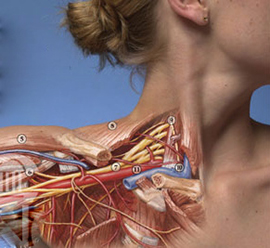
The clavicle sits above several of import nerves and blood vessels.
What is a Collarbone Fracture?
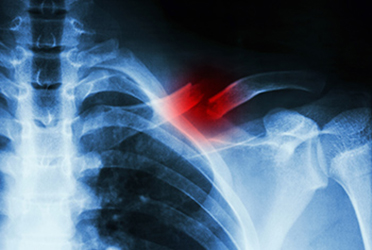
A fractured clavicle is the medical term used when the collarbone is broken.
The clavicle is the most unremarkably fractured os in the torso. The principal cause of a broken collarbone is trauma (sports injuries, auto accidents, falls). Rare causes include diseases that weaken the collarbone such as osteoporosis or cancer.
Collarbone fracture symptoms
Fractured collarbone sufferers take the following symptoms:
- Pain
- Sagging shoulder (down and forrad)
- Disability to lift the arm because of pain
- A grinding sensation if an attempt is made to raise the arm
- A deformity or "bump" over the break
- Bruising, swelling, and tenderness over the collarbone
Diagnosis of Collarbone Fracture
Diagnosis is fabricated with a consultation - During the consultation Dr Harper will:
- accept a medical history : specifically assessing the amount of free energy absorbed in the trauma. Commonly associated injuries such as scapula, rib fractures and/or haemothorax volition be explored.
- perform a concrete examination: looking for clavicular deformity, scapula disproportion and bruising. Range of motion is express and may exist associated with crunching at the fracture site.
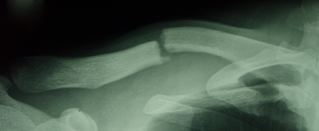
- Imaging tests -Ten-rays – an x-ray volition define the break: the number of pieces and the degree of separation of the fragments. 10-rays of the shoulder volition be washed to check for additional injuries (eg. scapula fracture).
While not all of these approaches or tests are required to confirm the diagnosis, this diagnostic process will also allow Dr Harper to review any possible risks or existing conditions that could interfere with the fracture direction or its effect.
Treatment for Collarbone Fracture.
If the broken ends of the bones have not shifted out of place and line up correctly, the patient is treated non-operatively. Broken collarbones have a loftier healing rate without surgery. If the patient's bones are displaced, surgery may be appropriate to align the bones and hold them in position while they heal. This tin can better shoulder function later on recovery.
Non Surgical Treatment can include:
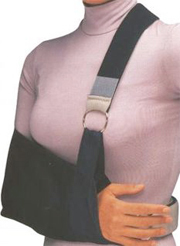
- Arm support
- Medication
- Physical Therapy
The patient volition need to come across your medico until the fracture heals. The fracture tin motion out of identify before it heals. If the bone heals in the wrong position, called a "malunion", it tin can bear upon the patient's shoulder function..
Collarbone Fracture Surgery
Plates and screws can exist used to reposition and hold the bones into their normal alignment. The anatomic S shaped metal plates are applied to the upper surface of the bone.
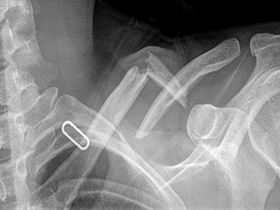
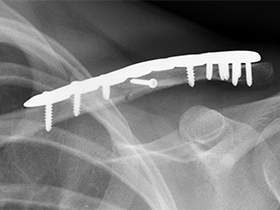
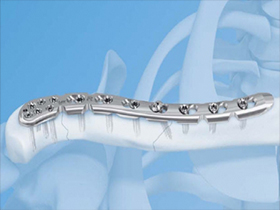
Not-Operative treatment of Collarbone Fracture Risks
A Collarbone Fracture is not life threatening but tin bear on a patient'due south quality of life and function.
Collarbone Fractures can lead in the
- Short Term - to pain, slumber disturbance and disability.
- Long Term - to malunion or non-union, that can effect in ongoing pain and loss of part .
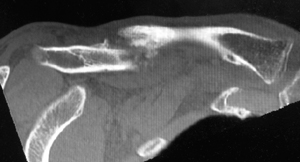
CT scan showing non-union of the clavicle.
Surgery Risks
As with any major surgery in that location are potential risks involved. The decision to proceed with the surgery is fabricated because the advantages of surgery outweigh the potential disadvantages.
It is important that the patient is informed of these risks earlier the surgery takes identify.
Complications tin can be general or specific to collarbone fracture surgery.
General complications include those of the anesthetic and your full general well being. Well-nigh whatever medical condition can occur so this list is non complete. Complications include:
- Allergic reactions to medications or anaesthetic.
- Complications from nerve blocks are rare just tin include nerve harm that usually resolves.
- Blood Clots (Deep Venous Thrombosis) - occur very rarely after shoulder surgery. Blood clots can form in the arm or leg muscles and tin travel to the lung (Pulmonary embolism). These can occasionally be serious and fifty-fifty life threatening. If the patient suffers arm pain, redness or swelling, or have shortness of jiff at whatever stage, contact Dr Harper, your GP or your local hospital.
Serious medical bug can lead to ongoing health concerns, prolonged hospitalisation or rarely expiry.
Specific complications for surgery are rare but may include:
- Infection - Infections can occur superficially at the incision or deep and involve the plate. Infection rates for clavicle surgery are < 1% in salubrious individuals. Infection can be treated with antibiotics merely may require farther surgery.
- Shoulder Stiffness - Shoulder stiffness with loss of range of motility is a common complication that can be minimized with acceptable analgesia and adherence to your therapy program prescribed by your surgeon.
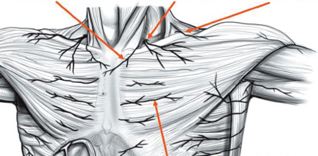
- Damage to fretfulness of Blood Vessels - The surgical incision required to insert a plate divides some small skin nerves over the front of the shoulder causing a numb patch that improves over xviii months but may never reach the aforementioned sensitivity as the non-operated side. It is very rare to injure a nerve that can lead to weakness or loss of movement in office of the arm. Impairment to blood vessels may require further surgery if bleeding is ongoing.
Grooming for Collar Bone Surgery
If surgery is selected every bit the treatment of choice, preparation is necessary to attain the best results and recovery.
Preparing mentally and physically for surgery is an important step toward a successful result.
- Dr Harper volition outline the treatment plan and
- patients will need to understand the process and their participation.
Dr Harper will also talk over:
- whatsoever medications being taken, to meet which ones should be stopped earlier surgery
- fasting times: exercise not eat or drinkable annihilation, including water, for 6 hours before surgery
- finish taking aspirin, warfarin, anti-inflammatory medications or drugs that increase the take a chance of bleeding one calendar week before surgery to minimise bleeding
- stop or cut down smoking to reduce your surgery risks and ameliorate your recovery
Written report any infections (dental, skin, breast, urinary) to Dr Harper prior to surgery every bit the procedure cannot be performed until all infections have cleared up.
Postal service Surgery
The patient volition wake upwards in the recovery room and so be transferred dorsum to their hospital room after about 45minutes.
- Pain medication volition be provided to go along the patient comfy.
- A bandage will be around the operated shoulder and the arm will be in a sling or brace.
- The sling will be worn for comfort simply.
Dr Harper will see the patient prior to discharge and explain the findings of the operation and what was done during surgery.
- The bandage volition normally be removed before belch and waterproof dressings practical.
- It is normal for the shoulder to swell after the surgery. Placing Ice-Packs on the shoulder volition assistance to reduce swelling. Ice packs should be practical to the area for 20 min iii-4 times a twenty-four hour period until swelling has reduced.
The patient should keep a pillow under their elbow while lying in bed.
- The patient will not be allowed to elevator annihilation over your caput or anything greater than 1 kilo for the offset six weeks.
- x- 14 days after surgery Dr Harper volition meet the patient to monitor their progress and remove the sutures.
It is recommended that the patient non bulldoze while wearing a sling due to safety reasons.
The patient volition exist given specific instructions regarding activity and a rehabilitation program of exercise and strengthening.
Eating a healthy diet and not smoking will promote healing.
mcintirelacir1946.blogspot.com
Source: https://www.shouldersurgery.com.au/collarbone-fractures.html
0 Response to "Can a Broken Collar Bone in a Baby Cause Nerve Damage Later in Life"
Publicar un comentario